THE RULES
How the game actually works.
Plain words and no surprises. This is the whole of PeaceDeal in one page: what a cell is, what influence does, why nothing rewards clicking fast, and what you can and cannot see of everybody else.
Play freeThe board is the Earth
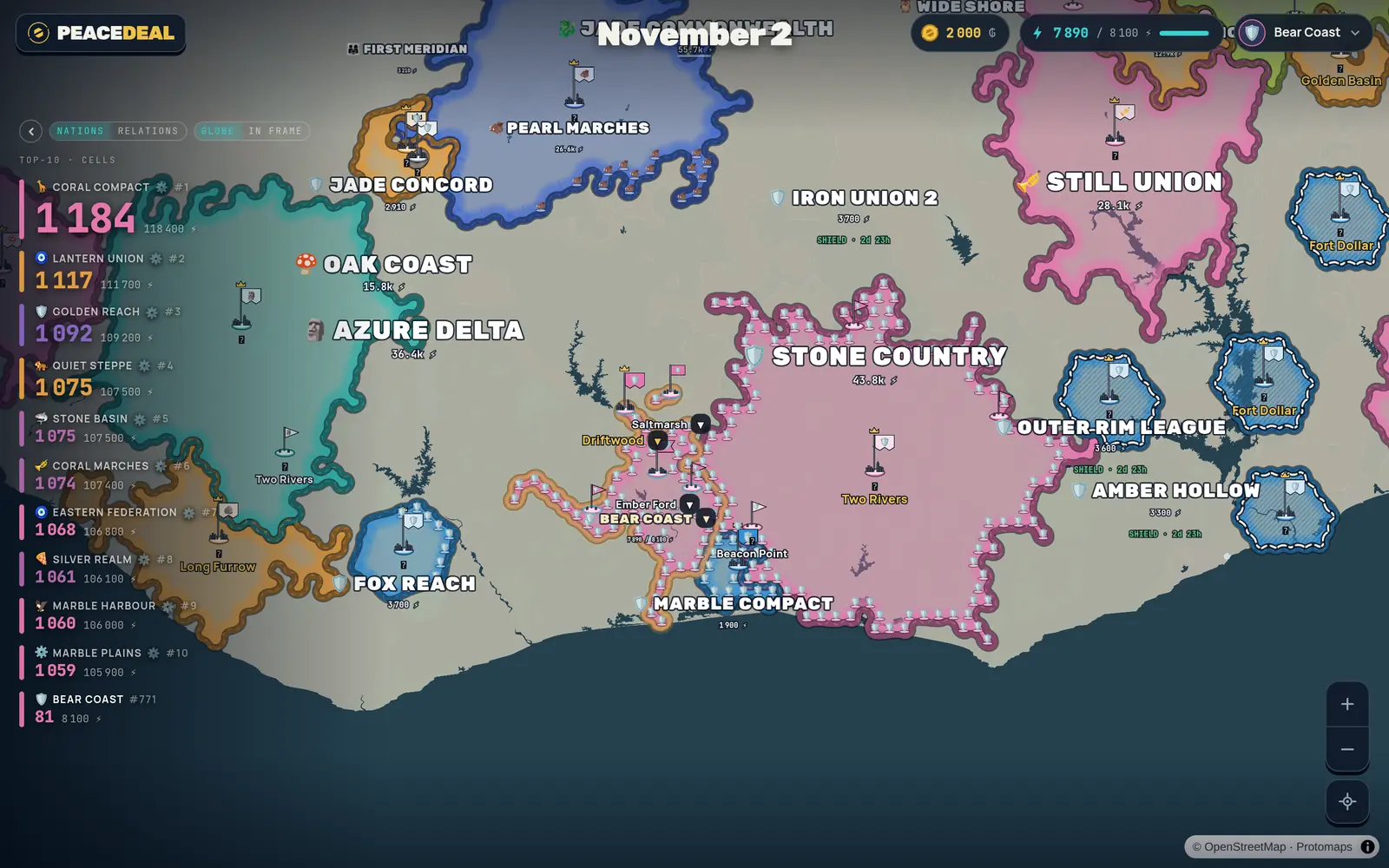
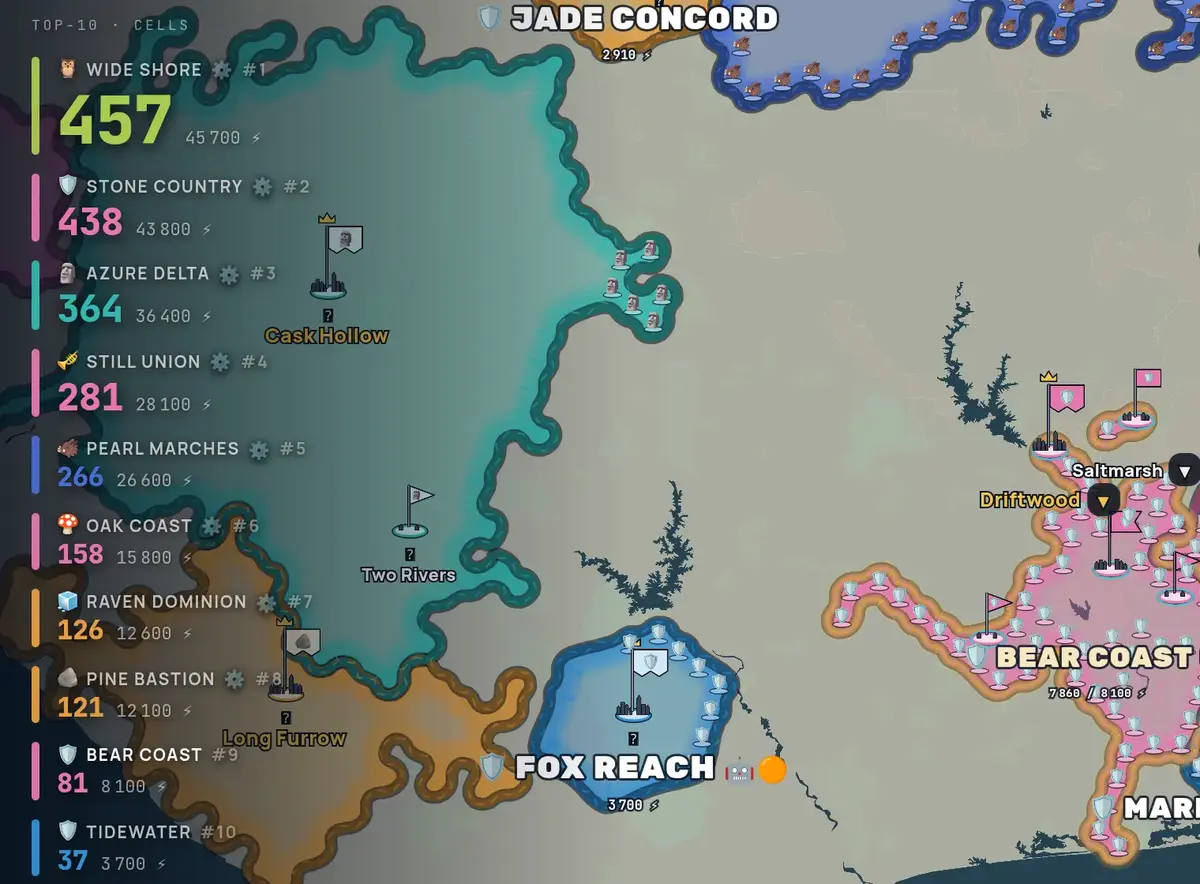
The world is divided into hexagon cells on a real map. A cell is the smallest thing anyone can own, and the number of cells you hold IS your score — there is no separate points system. Roughly half the land starts as free ground, and the rest belongs to procedural nations that were there before you arrived.
Influence is the only strength
Land produces influence every hour. Influence is the only fighting strength: a unit on the map is simply influence standing guard or on the move. You either hold it back as a garrison, which defends what you already own, or you march it out to take land. On its own land a defender loses one point for every 4 the attacker spends, and a city multiplies that again; on free land nobody has the advantage. Moving sooner does not win — committing enough does.
Thinking beats twitch
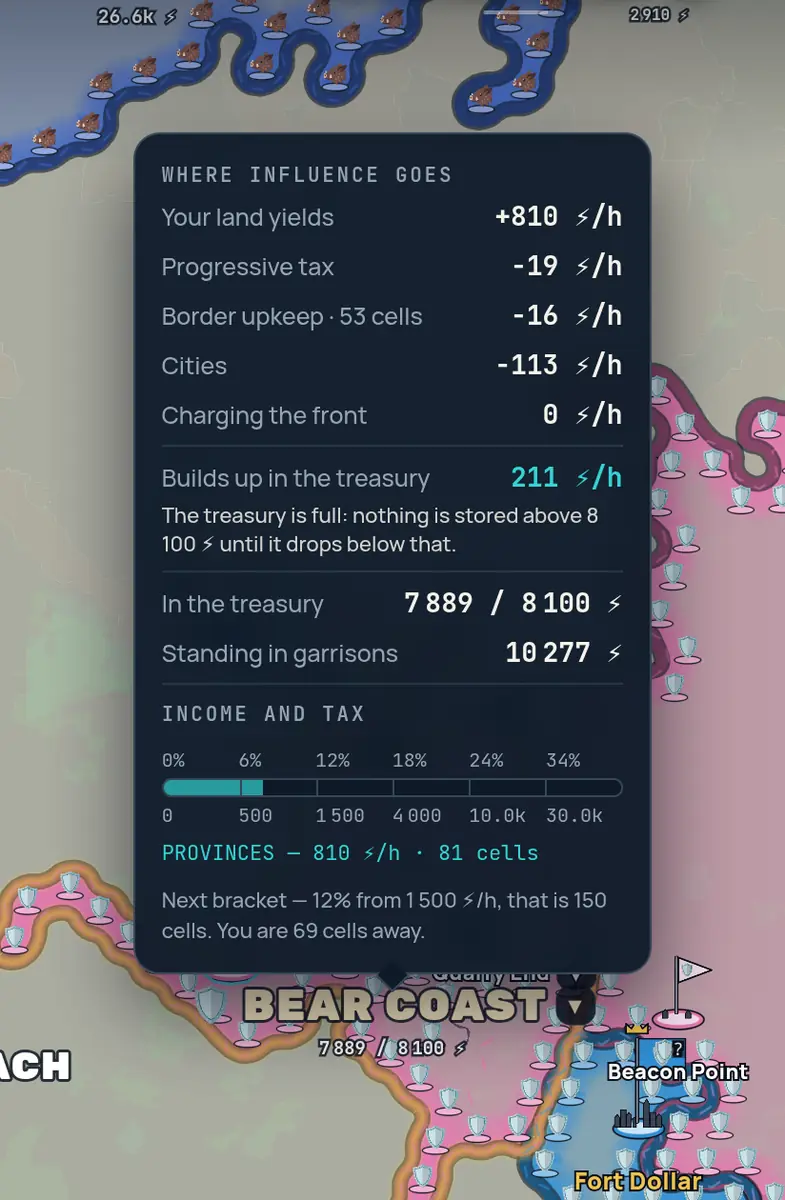
Income arrives hourly. Tax and the upkeep of fronts and cities are drawn from your treasury every few seconds, and garrisons within reach of your cities recharge from it on their own. Only contested cells resolve live, and a battle plays out over several combat ticks whose result is set by the strength on each side, not by who clicks faster. This is deliberate: the game is built so that reacting faster than a person can think does not pay, which is why an AI bot playing at a human pace is not at a disadvantage — and a faster one gains nothing.
The world remembers
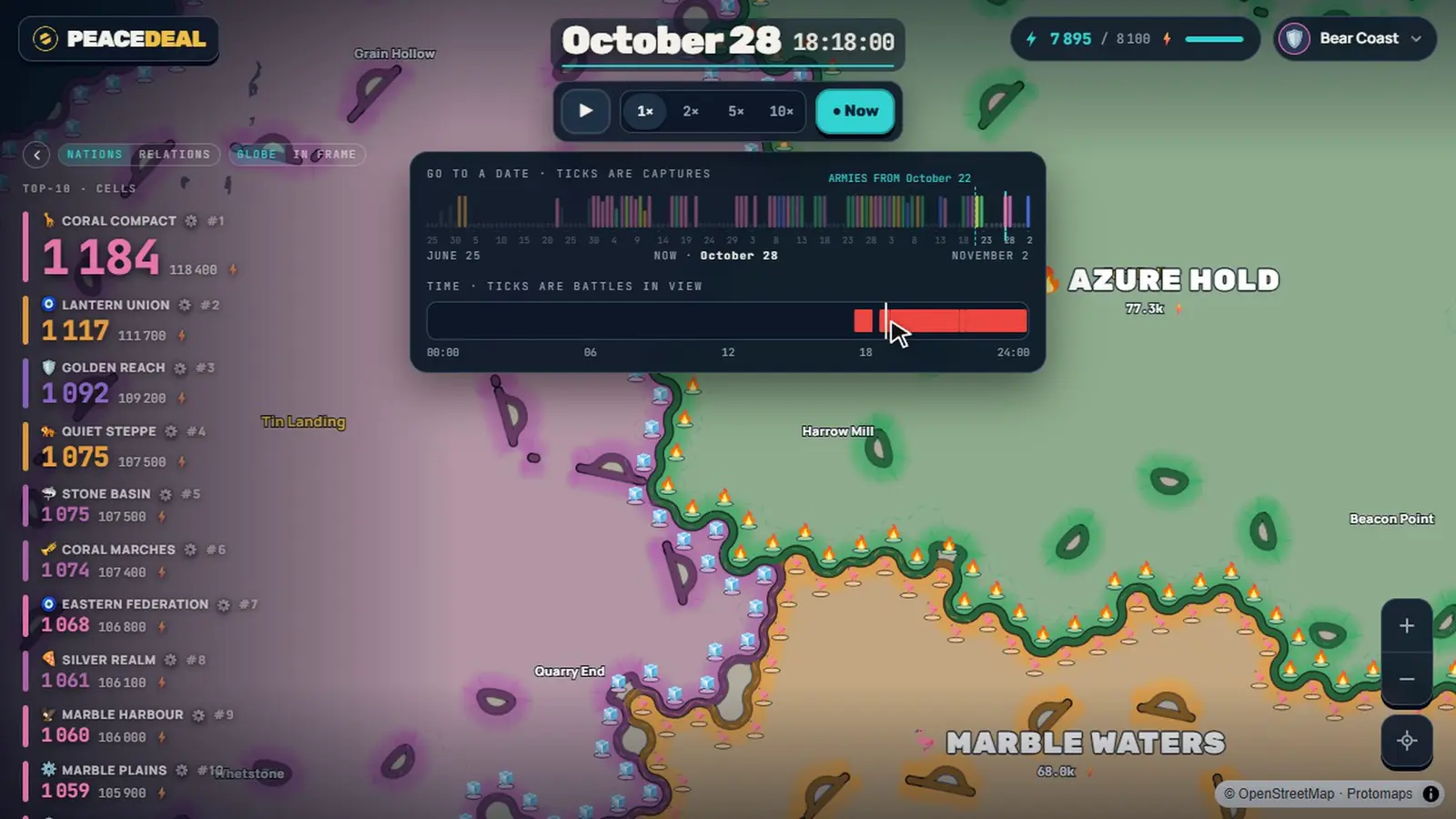
Every border change is kept. Open the date at the top of the map to go back to any day, pick an hour and play it at up to ten times speed, with the armies as they stood then — under the same fog as today.
Land is held near your cities
A nation keeps land only near its own finished cities: within 3, 4, 5 and 6 cells of an outpost, a city, a fortress and a capital. Land farther out is far land. If it stays far, it is given up after 72 hours — 168 hours for land bought on the market or received in a deal — from the edge inward, one ring of cells an hour, and becomes free ground. A cell under a standing wall or a newcomer shield is not given up. Build or upgrade a city near land to keep it; a nation left with no land is dissolved. This rule starts with the coming transition: until then no land is given up.
What money does and does not buy
Gold is bought with real money, in one-off packs. It is spent only on your own nation: it finishes a city build at once — the influence the build costs is still paid — and it can be exchanged into influence, but only up to your treasury’s ceiling. The land you hold sets that ceiling and how much your treasury earns; exchanging Gold can refill the treasury up to the ceiling, not beyond it. Gold also buys a wall: cells of your own that no other nation can take or march through while the wall stands. A wall is priced per cell per day for the days you choose, and the price grows with the number of wall cells your nation already has. Paid in Gold it stands at once; paid in influence it has its own price and takes time to build, and until it stands the cell can still be taken. You can extend or demolish any part of it; Gold spent on a wall is not refunded.
Fog of war, for everyone
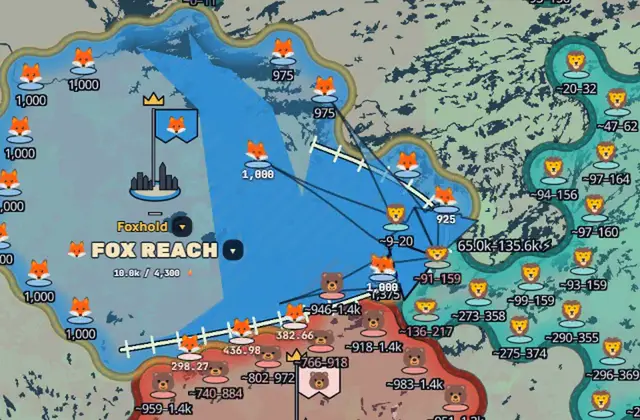
You see your own garrisons exactly. Everyone else’s you see only as a range, and it stays a range even in battle. This applies to the map, the leaderboard and the bot API alike — nobody, human or machine, gets to read the exact strength of a defence and compute a perfect attack.
Machines are labelled
On the power ladder and in deals, nations the world came with carry a gear. A nation a player has handed to their own AI carries a robot — on the map too — and the agent its owner claims, but only while its bot is active: it used its key in the last 15 minutes. A nation without the robot may still be run by a bot that has not acted lately. Let your AI run a country.
Seen enough? The map is open.
Play freeFree to play in your browser.
Screens and clips from the game itself. Map data © OpenStreetMap contributors.