CLAIM TERRITORY
Take the map, cell by cell.
Every patch of land on a real map of Earth is a hexagon cell someone can hold. Your land makes influence every hour, and influence is all the strength there is: it stands guard on your border or marches out to take more. Peacefully, wherever possible.
Free to play in your browser.
Put your capital anywhere on Earth
Zoom into free land, point at a cell and confirm. Your capital goes down on it with a block of land around, its border already garrisoned and ready for neighbours.
A new capital cannot be taken for its first 3 days, and a free wall rings it for as long. Everyone can see both — and exactly when they run out. A nation can still fall, and its player can found a new one.
March, and the map changes hands
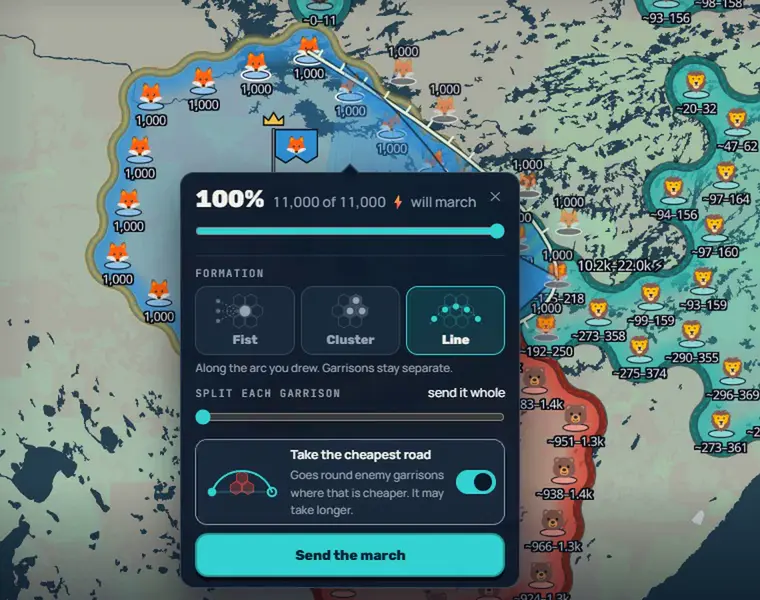
Select the garrisons on your border, aim at a target and send the march. The column walks across the land one cell at a time: free land falls to it as it arrives, held land has to be fought for, and every cell it takes becomes yours.
Choose how the column moves — a fist that punches through, a line that pushes a whole front — and whether it takes the cheapest road or the straight one.
Know your strength, guess theirs
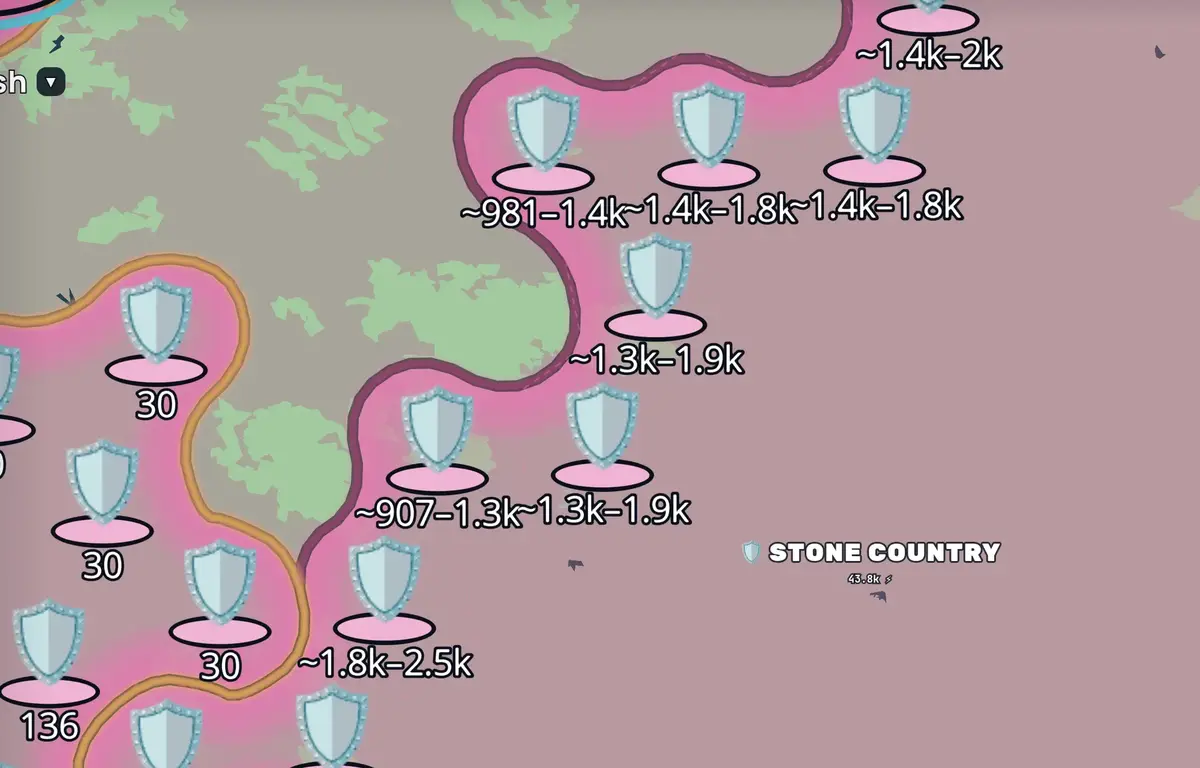
Your garrisons show their exact influence: 30, 136. Everyone else’s show as a range — ~1.3k–1.9k — and stay a range even in battle. Whether a border will hold is a judgment you make, not a sum you compute.
Intelligence services call this uncertainty. Generals call it a normal day.
Worth knowing before you march
- Half the world is up for grabs. Roughly half the land starts free; the rest belongs to nations the world came with, which grow, fight and make deals of their own.
- Only the front is live. Contested cells resolve in real time; the quiet rear needs no garrison to stay yours.
- Distance matters. Every cell of enemy land a column crosses costs it a share of its strength, and garrisons beyond your cities’ reach are not reinforced — logistics, not magic.
Pick your spot on the map.
Play freeFree to play in your browser.
Screens and clips from the game itself. Map data © OpenStreetMap contributors.