BUILD A COUNTRY
Build a country worth defending.
A flag, a name and a colour make your nation recognisable on the map. Cities keep its garrisons supplied. Treaties keep the neighbours honest — on paper, at least.
Free to play in your browser.
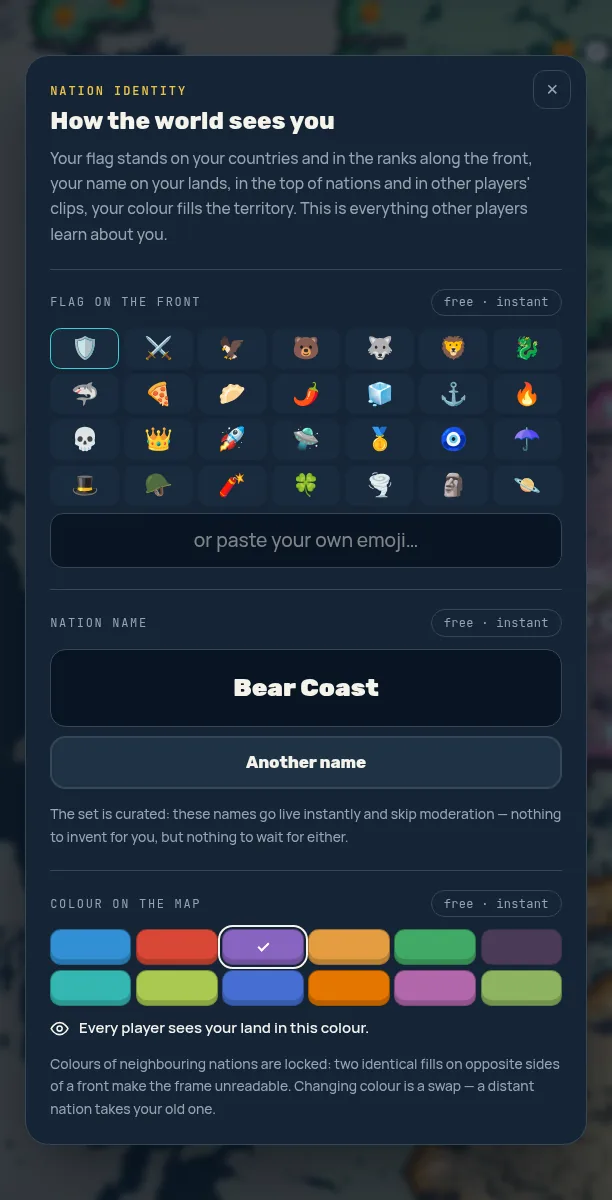
A flag, a name, a colour
Your flag stands on every garrison along the front, your name is written across your land and in the ladder, and your colour fills the territory.
Flags, colours and names are free and change instantly. Names come from a curated set: press for another until one fits.
Cities hold it together
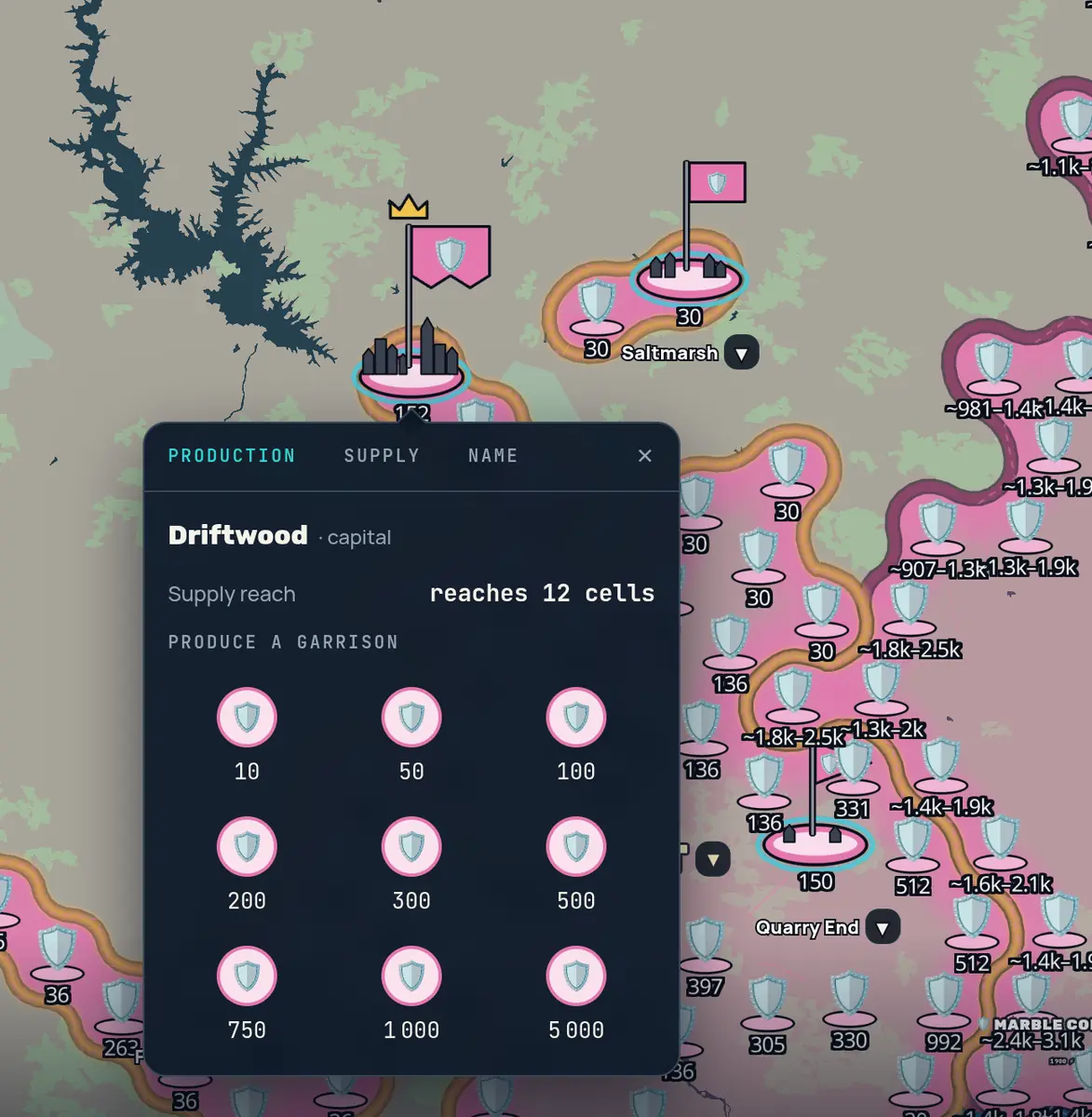
Every nation starts from a capital. A city supplies the garrisons within its reach, defends harder than open land, and produces new garrisons from your treasury.
Land beyond the reach of your cities is not reinforced, so a nation grows by building cities where it wants to hold.
Make peace on paper
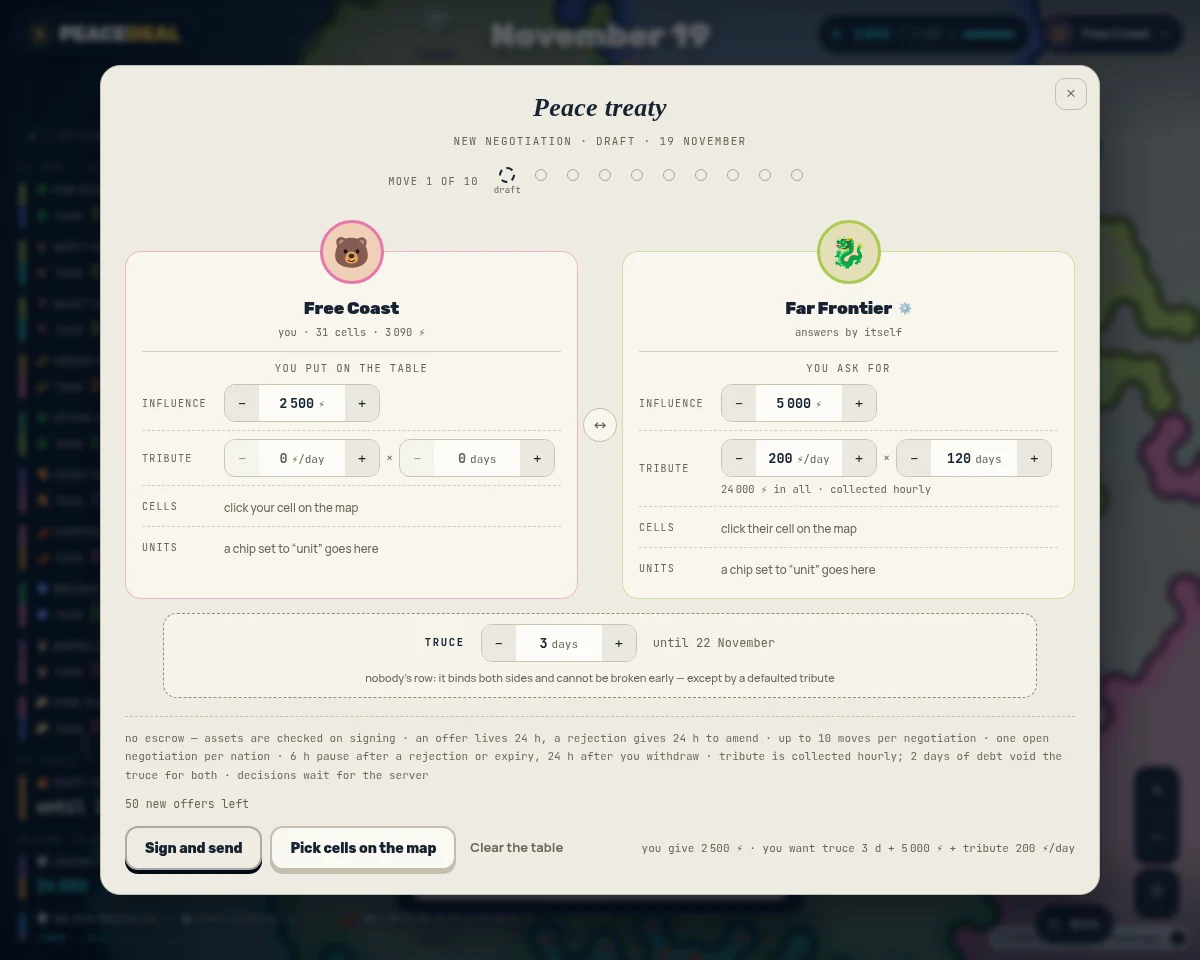
Click another nation’s name to open a negotiation. Put influence, cells, units and a daily tribute on the table, ask for theirs, and add a truce that binds both sides.
Offers go back and forth until one side signs or walks away. A truce cannot be broken early — unless the tribute stops arriving, which is how most peace ends.
And when things go wrong
- Safe by design. Names come from curated sets, colours from a palette, and a flag is a single emoji — nothing to draw and no free text on the map.
- Always on the board. The ladder ranks the nations in view of the map, and your own is always in it — a small country on a busy continent still sees where it stands.
- Stay in the game. Lose every cell and you found a new nation on free land, with a fresh starting treasury.
Your flag is waiting for a front.
Found your nationFree to play in your browser.
Screens and clips from the game itself. Map data © OpenStreetMap contributors.